

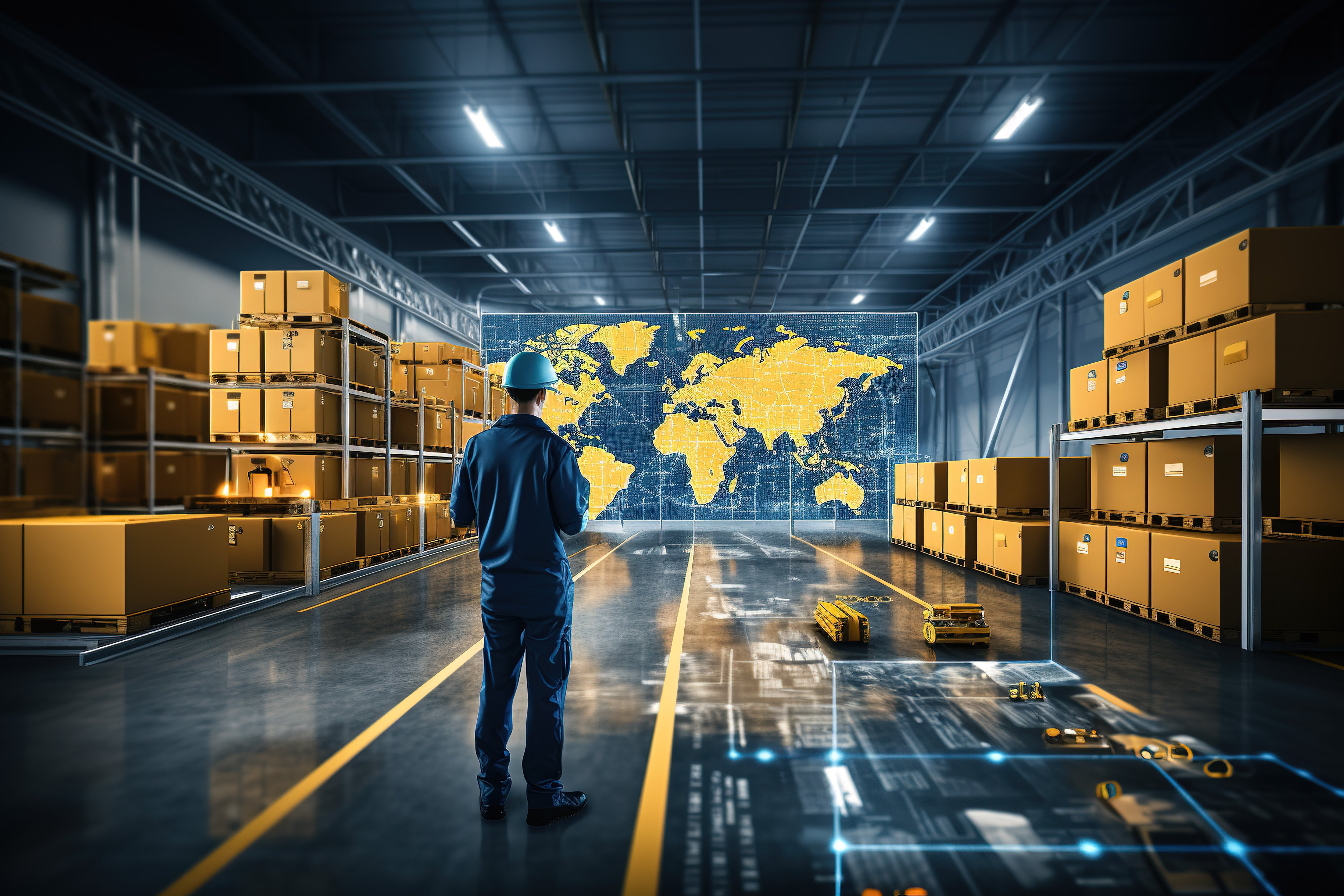
In today’s fast-moving digital economy, supply chains are evolving faster than ever before. Traditional, linear supply chains are giving way to smart, connected systems that share real-time data, automate decisions, and optimize logistics from end to end. These modern systems are known as digital supply chain networks — and they’re transforming how businesses manufacture, ship, and deliver products.
At Ship 'N Pack, we’re part of this transformation. As a technology-driven fulfillment partner, we help eCommerce and CPG brands harness the power of digital supply networks to increase visibility, speed, and control. In this blog, we’ll explore what a digital supply chain network really is, how it works, and why it’s reshaping the future of global logistics.
What Is a Digital Supply Chain Network?
A digital supply chain network (DSCN) is an interconnected system of suppliers, manufacturers, logistics providers, and retailers that use advanced digital technologies to share data and make faster, smarter decisions.
Unlike traditional supply chains that operate in a straight line — from supplier to manufacturer to retailer — a digital network is dynamic and interconnected. It allows every stakeholder in the chain to communicate instantly, creating transparency, flexibility, and real-time responsiveness.
Think of it as the difference between a paper map and a live GPS system. While the old model gives you a fixed route, a digital network gives you live updates, alternate paths, and predictive insights.
The Role of Industry 4.0 in Modern Supply Chains
Industry 4.0 refers to the fourth industrial revolution — the integration of technologies like automation, artificial intelligence (AI), the Internet of Things (IoT), and cloud computing into manufacturing and logistics.
When applied to supply chains, Industry 4.0 transforms how companies plan, move, and monitor their products. It connects every stage of the supply chain through data, sensors, and analytics, enabling proactive management instead of reactive responses.
Key Technologies Driving Industry 4.0 Supply Chains
-
Internet of Things (IoT): Smart sensors track product movement, temperature, and conditions in real time.
-
Artificial Intelligence (AI): Predictive analytics forecast demand and prevent stockouts or overstocking.
-
Automation & Robotics: Automated picking, packing, and sorting improve speed and accuracy in fulfillment centers.
-
Cloud Computing: Centralized data storage allows teams across locations to access the same information instantly.
-
Blockchain: Provides secure and traceable records for shipments and supplier transactions.
-
Big Data & Analytics: Converts raw information into insights for cost savings and process improvement.
At Ship 'N Pack, we incorporate many of these principles in our fulfillment systems — offering brands real-time tracking, automated updates, and streamlined logistics across their entire supply network.
How a Digital Supply Chain Network Works
To understand how DSCNs operate, let’s compare them with traditional supply chains.
In a conventional setup, each stakeholder works independently. Data often moves slowly, through manual reports or batch updates. In contrast, a digital supply network creates a continuous flow of data between all participants.
Here’s how it works step-by-step:
-
Data Capture: Sensors, scanners, and software collect data from every point — from raw material suppliers to end-customer delivery.
-
Integration: All data flows into a central platform or cloud network accessible to all relevant partners.
-
Analysis: AI and analytics process this data to find patterns, predict demand, and identify risks.
-
Automation: Systems automatically trigger actions — like reordering stock, rerouting shipments, or optimizing routes.
-
Visibility: Every stakeholder gains real-time visibility into inventory levels, order statuses, and potential disruptions.
For eCommerce and CPG brands using Ship 'N Pack, this kind of connectivity means fewer blind spots, faster reactions, and smoother customer experiences.
Benefits of a Digital Supply Chain Network
Digital transformation brings measurable benefits across all aspects of supply chain management. Here’s what brands can expect.
1. End-to-End Visibility
With digital integration, every product can be tracked from origin to destination. This transparency allows businesses to monitor performance, manage inventory, and detect potential bottlenecks before they escalate.
2. Improved Collaboration
Digital networks connect suppliers, manufacturers, logistics providers, and retailers on one shared platform. This collaboration reduces communication delays and allows everyone to act on the same data in real time.
3. Faster Response Times
When disruptions occur — whether it’s a delay at the port or a sudden demand surge — real-time data allows immediate adjustments. Orders can be rerouted, production rescheduled, and delivery timelines updated instantly.
4. Predictive Insights
Using AI and analytics, businesses can forecast demand more accurately. This reduces excess inventory, minimizes waste, and ensures the right products are available at the right time.
5. Cost Efficiency
Automation and real-time visibility reduce manual labor, administrative costs, and error rates. Streamlined logistics also help optimize transportation routes and reduce shipping expenses.
6. Sustainability & Waste Reduction
By optimizing resource use and transportation, digital networks lower carbon emissions and waste. Many brands are adopting these systems to meet sustainability goals.
7. Enhanced Customer Experience
Ultimately, a well-connected supply chain leads to happier customers. When brands can provide accurate delivery timelines, proactive updates, and consistent product availability, it builds trust and loyalty.
The Shift from Supply Chain to Supply Network
In traditional models, supply chains were designed as one-way processes — goods flowed downstream, and information lagged behind. In the Industry 4.0 world, that structure no longer works.
The modern reality is that data flows both ways. Customers leave reviews, retailers send feedback to manufacturers, and suppliers adjust based on real-time demand. The system behaves more like a network than a chain.
This shift is what makes digital supply chain networks so powerful. Instead of disconnected stages, every point of the chain is connected — allowing decisions to be made faster and with better context.
At Ship 'N Pack, we’ve adopted this mindset fully. We view logistics not as isolated movements but as part of an interconnected ecosystem that adapts and evolves continuously.
Common Challenges in Building a Digital Supply Chain
While digital networks offer clear advantages, implementing them can be complex. Here are a few common challenges brands may face.
1. Data Integration
Many companies still rely on legacy systems that don’t communicate well with modern software. Integrating these systems requires planning and reliable partners.
2. Cybersecurity Risks
With more connected devices and systems, data protection becomes critical. Businesses must ensure robust cybersecurity to safeguard sensitive supply chain information.
3. Skill Gaps
Digital transformation requires employees who understand analytics, automation, and technology-driven decision-making. Training and upskilling are vital.
4. Cost and Change Management
Transitioning from manual or semi-digital systems to fully connected networks takes investment and strategic planning. However, the long-term savings and efficiencies far outweigh the initial costs.
5. Partner Alignment
All participants in the supply chain need to adopt compatible systems and processes. If one partner lags behind, it can disrupt the flow of information for everyone.
How Ship 'N Pack Adapts to the Industry 4.0 Supply Chain Model
Ship 'N Pack is built for the modern era of logistics. We combine advanced technology with expert human oversight to deliver fulfillment that’s transparent, efficient, and scalable. Here’s how we align with the principles of Industry 4.0.
-
Automation: Our fulfillment centers use automation for picking, packing, and order management to improve speed and accuracy.
-
Real-Time Tracking: Every shipment is traceable, giving brands and customers live updates at every step.
-
Data-Driven Decisions: We analyze usage trends, order volume, and shipping routes to optimize cost and efficiency.
-
Integration: Our systems sync seamlessly with major eCommerce platforms, enabling continuous data flow.
-
Scalability: Whether you’re handling hundreds or thousands of orders daily, our systems grow with your brand.
-
Transparency: Clients have full visibility into inventory levels, shipment status, and order history through our digital dashboard.
By embracing these principles, Ship 'N Pack helps businesses transition from traditional supply chains to dynamic, digital ecosystems built for the Industry 4.0 age.
Why Digital Supply Chains Are the Future
The next generation of global trade will depend on real-time, data-driven collaboration. Brands that embrace digital supply chain networks will outperform competitors still relying on manual systems.
Digitalization isn’t just about speed — it’s about resilience. Businesses that can quickly adjust to market changes, supply disruptions, or global events will not only survive but thrive. With technologies like predictive analytics, AI, and IoT, decision-making is faster, smarter, and more accurate than ever before.
For eCommerce and CPG brands, this means fewer delays, optimized inventory, and exceptional customer satisfaction — all key ingredients for long-term success.
Steps to Begin Building a Digital Supply Chain Network
Transitioning doesn’t have to happen overnight. Here’s a roadmap to start your digital journey.
-
Evaluate your current supply chain processes – Identify manual steps and data silos that cause inefficiencies.
-
Adopt an integrated platform – Choose systems that connect inventory, orders, shipping, and customer data.
-
Partner with a tech-driven fulfillment provider – Work with companies like Ship 'N Pack that already operate with digital visibility and automation.
-
Implement real-time tracking tools – Ensure your logistics provide live data instead of end-of-day reports.
-
Leverage analytics for forecasting – Use data to predict demand and adjust inventory before shortages occur.
-
Train your team – Build digital literacy so everyone understands and utilizes the new systems.
-
Monitor and optimize – Continuously refine your processes based on real-time performance metrics.
With the right tools and partnerships, any brand — large or small — can build a digital supply network that delivers measurable growth.
Key Takeaways
-
A digital supply chain network connects all stakeholders through technology, automation, and real-time data.
-
Industry 4.0 technologies such as AI, IoT, and analytics make supply chains more predictive and efficient.
-
Visibility, collaboration, and speed are the defining advantages of a digital network.
-
Ship 'N Pack integrates Industry 4.0 principles to help brands modernize logistics and scale with confidence.
-
The future belongs to brands that embrace connectivity, transparency, and smart decision-making.
Conclusion
The world of logistics is no longer about moving boxes — it’s about moving data, decisions, and experiences. In the age of Industry 4.0, the digital supply chain network is redefining how products flow and how businesses compete.
By adopting automation, real-time visibility, and intelligent analytics, brands gain the power to operate with precision, efficiency, and agility. At Ship 'N Pack, we make that transformation simple — turning complex supply chains into smart, seamless networks built for growth.
The future of fulfillment is digital — and Ship 'N Pack is here to help you lead it.
FAQs
Q1. What does “digital supply chain network” mean?
It’s a connected system that uses technology to link suppliers, warehouses, logistics, and customers for real-time coordination and visibility.
Q2. How is a digital supply chain different from a traditional one?
Traditional supply chains are linear and often manual, while digital supply networks are interconnected, automated, and data-driven.
Q3. What role does Industry 4.0 play in supply chains?
Industry 4.0 introduces smart technologies like AI, IoT, and automation, allowing supply chains to operate more efficiently and predictively.
Q4. Is digital transformation expensive for smaller brands?
Not necessarily. Many digital tools are scalable and affordable. Partnering with tech-enabled providers like Ship 'N Pack helps small brands access advanced systems without major investments.
Q5. How does Ship 'N Pack support digital supply chains?
Ship 'N Pack integrates automation, analytics, and real-time tracking into fulfillment operations, ensuring full visibility, faster decisions, and seamless scalability for every client.


